The Section 122 import surcharge of 10% that has applied to nearly all U.S. imports since February 24 reaches its hard statutory expiration on July 24, 2026. That is 31 days out. This is not a soft deadline or a policy the administration can quietly extend by proclamation. Section 122 of the Trade Act of 1974 caps any such surcharge at 150 days, and only an act of Congress can push it past that limit. As of right now, no extension legislation is moving, and most trade counsel consider an extension unlikely.
A note on the rate, because it gets misreported. The surcharge in effect is 10%. The statute permits a ceiling of up to 15%, and the President publicly floated raising it to that cap the day after the proclamation, but that increase was never formalized through an updated proclamation. Every operative document, the proclamation, the Federal Register order, and the CBP guidance, sets the rate at 10%. If you are budgeting against 15%, you are budgeting against a number that was never enacted.
For importers, the next month is a planning window, not a finish line. Here is what is actually known, what is still open, and how to think about landed costs on both sides of July 24.
What happens to the surcharge on July 24
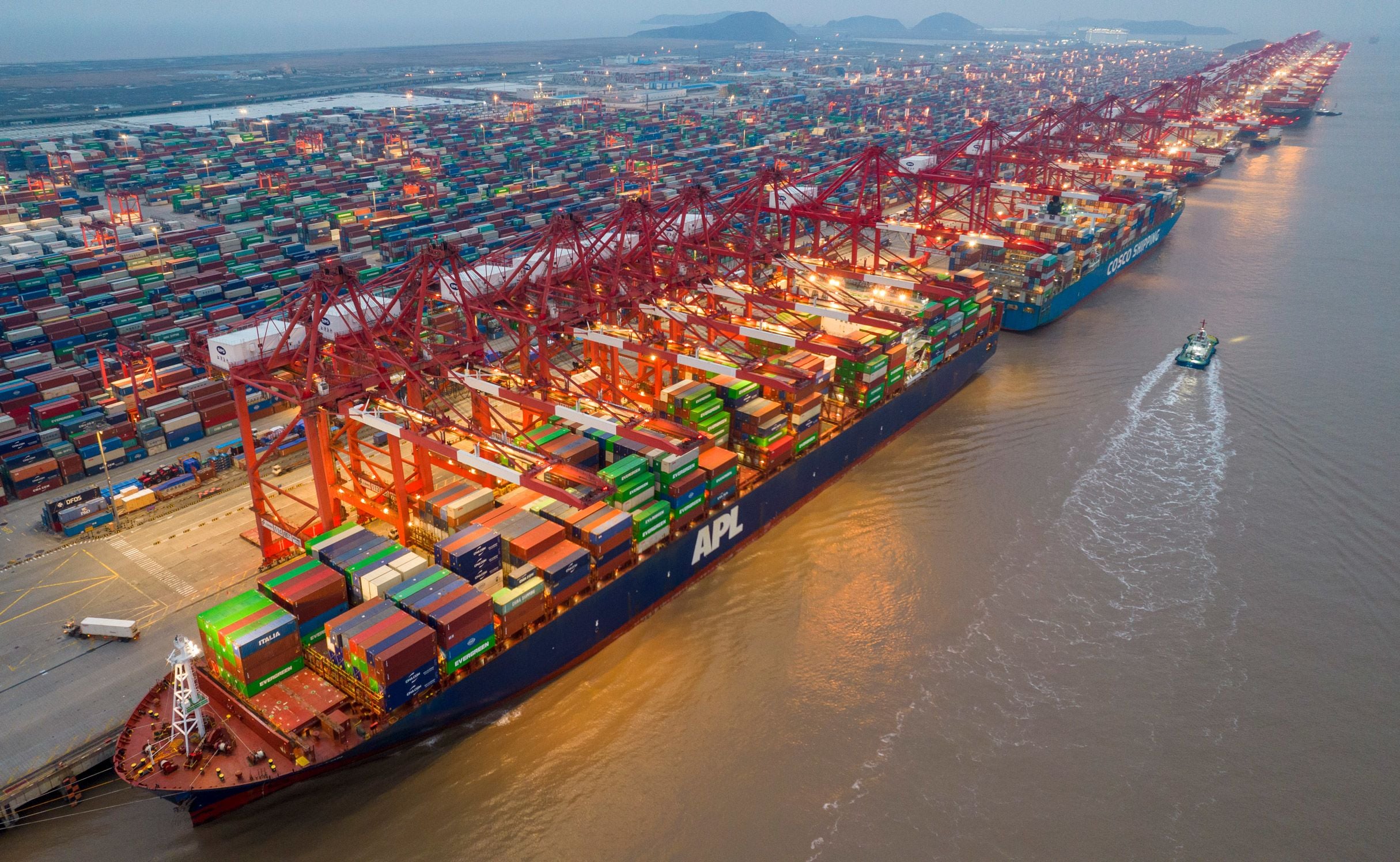
If nothing replaces it, the Section 122 surcharge simply lapses. Goods entered for consumption on or after July 24 would not carry the 10%. Goods entered before that date still do. Because ocean transit from Asia typically runs 30 to 45 days, shipments you are booking today are landing right at the cutoff, which means entry timing, not departure timing, is what determines whether a container pays the surcharge. Work the entry date backward, not the sailing date.
One detail worth knowing: Section 122 does not stack on Section 232. Where 232 metals duties already apply to part of a shipment, the 10% surcharge applies only to the non-232 portion. So if your goods are partly covered by steel, aluminum, or copper duties, your real Section 122 exposure is already smaller than a flat 10% on full value.
Why you should not assume rates drop back to early-2025 levels
The administration has been clear that Section 122 was a bridge, not the destination. The replacement mechanism is Section 301. Two recent developments make that direction concrete.
First, in early June the U.S. Trade Representative proposed new Section 301 tariffs on 60 economies tied to forced-labor enforcement, at 10% for 15 trading partners and 12.5% for the other 45, with carve-outs for agricultural products, aviation parts, industrial inputs, minerals, pharmaceuticals, and anything already covered by Section 232. A public hearing is set for July 7, which lines this action up to land right around the time Section 122 expires.
Second, on June 15 the Supreme Court declined to hear the long-running challenge to the Section 301 List 3 and List 4A tariffs on Chinese goods, ending nearly six years of litigation. Those tariffs are now locked in and durable. Unlike Section 122, Section 301 and Section 232 tariffs carry no statutory expiration date. The practical takeaway: the form of your tariff exposure is likely to change on July 24, but the existence of elevated duty on imports from major trading partners is not going away.
The three scenarios to model
Rather than budgeting for a single outcome, build your landed-cost math for three.
One, clean lapse. Section 122 expires with no immediate replacement, and your duty drops by the 10% surcharge on affected goods until a new action takes effect.
Two, Section 301 backfill. The forced-labor 301 action (or a similar mechanism) takes effect at or near July 24. Depending on country of origin, the replacement could land near the same 10%, or higher at 12.5%, and it stacks on top of whatever Section 232 and existing China 301 duties already apply to your goods. A clean lapse and a 301 backfill can look identical on a 10% line item but diverge sharply once origin and product-specific stacks are layered in.
Three, partial gap. The surcharge lapses but the replacement lands a few weeks later, creating a short window of lower duty for goods entered in between. This is the scenario where entry timing can genuinely save money, and it is worth watching the Federal Register closely in the back half of July.
You do not have to model these by hand. Our tariff simulator at tariff.gatewaylines.com runs landed cost across 30,000-plus HTS codes and lets you test your actual product mix under each scenario, so you can see the dollar difference between a July 23 entry and a July 25 entry before you commit a booking. It is free to use, no account required.
One ocean-specific item that is NOT changing on July 24
Worth separating out, because it gets conflated: the Section 301 maritime fees on China-linked vessels (the per-net-ton and per-container port fees) remain suspended through November 9, 2026, under the U.S.-China trade understanding. The scheduled increase to $80 per net ton did not take effect, and the fee structure sits at zero for now. That suspension is independent of Section 122 and is not affected by what happens on July 24. If a carrier is still passing through a "Section 301 maritime surcharge" line item on current invoices, that is worth questioning.
What to do in the next 31 days
Pull your forward bookings and identify which containers are entering close to July 24, since those are the ones where timing decisions actually matter. Stress-test your continuous bond and your cash position against both a duty increase and a duty decrease, because either direction changes your CBP payment timing. Review supplier contracts for who bears tariff cost and whether there is refund language if duties are later overturned. And run your landed costs under all three scenarios above rather than picking one and hoping.
The court schedule and the legislative calendar are out of your hands. Your readiness is not. The importers who come through July 24 cleanly will be the ones who modeled the range instead of betting on a single outcome. Run your numbers at tariff.gatewaylines.com and know where you stand before the clock runs out.
Sources
This article draws on the text of Presidential Proclamation 11012, the corresponding Federal Register order (91 FR 9339), U.S. Customs and Border Protection guidance (CSMS #67844987), and the U.S. Court of International Trade opinion in State of Oregon v. United States (Slip Op. 26-47), together with published trade-law analysis from White & Case, Gibson Dunn, Skadden Arps, and PwC. Tariff rates, effective dates, and litigation status reflect publicly available information as of June 23, 2026, and are subject to change. This material is provided for general informational purposes and does not constitute legal or customs advice.