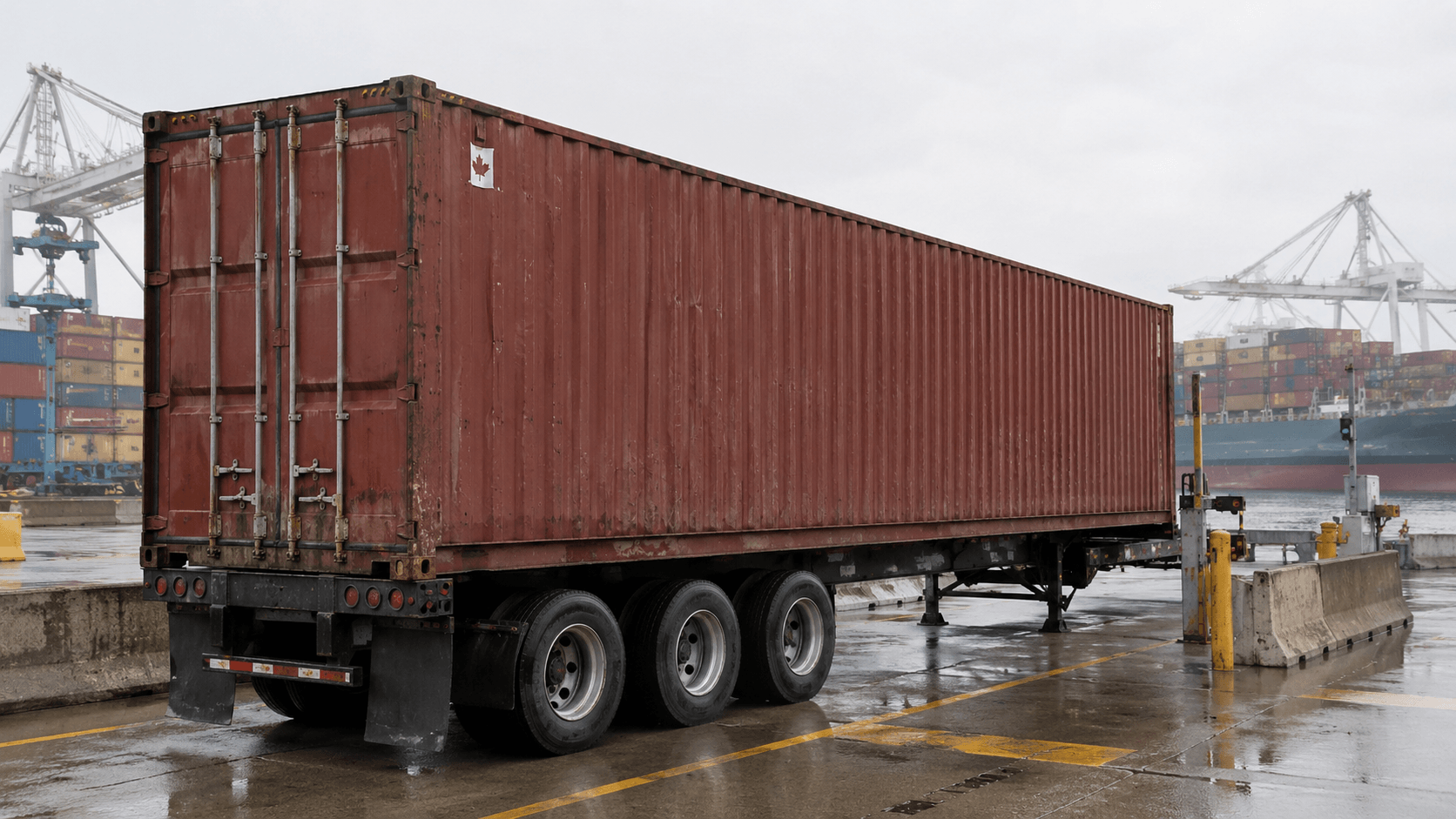
The additional 50 percent duty on Canadian goods is live. It took effect at 12:01 a.m. eastern time on August 22, 2026, hours after trade negotiations between Washington and Ottawa broke down.
Nearly every summary you will read calls it a tariff on dairy, alcohol and motor vehicles. That is where importers get hurt.
Those three words describe the disputes that prompted the action. They do not describe the goods. The covered lists run to 554 subheadings, and two of the three bear almost no relation to the sector named in the proclamation title. If you import anything from Canada, the sector is not the question. The code is.
Key facts
Authority: Section 338, Tariff Act of 1930 (19 U.S.C. 1338)
Rate: Additional 50 percent ad valorem, stacked on the ordinary rate
Effective: 12:01 a.m. eastern time, August 22, 2026
Covered subheadings: 554, across three lists in U.S. note 51
Filing headings: 9903.03.12 through 9903.03.16
CBP guidance: CSMS #69606660, issued August 21, 2026
USMCA relief: None
Canada's response: Dollar-for-dollar retaliation beginning September 8, 2026
How the date landed on August 22
Three proclamations signed July 20, 2026 imposed the duties: 11046 (alcoholic beverages), 11047 (dairy) and 11048 (motor vehicles). Each set an effective date of August 19, the statutory minimum of 30 days after proclamation.
On August 18, Proclamation 11056 suspended all three for three days and reset the effective date to August 22. The stated reason, in the proclamation's own findings, was that senior officials reported Canada had expressed a commitment to remove the measures at issue, and that the state of negotiations made a short suspension in the public interest.
The deal did not close. Talks collapsed late Friday, August 21. Prime Minister Mark Carney recalled Canada's negotiators, citing late changes to the framework. USTR Jamieson Greer said Canada declined to finalize terms agreed earlier in the week. The duty took effect on schedule at midnight.
One correction worth making, because it has circulated: the suspension was not a hidden change. Proclamation 11056 hit Federal Register public inspection on August 21 at 11:15 a.m., and CBP issued filing guidance the same night at 11:16 p.m. eastern. Formal publication followed on August 24 at 91 FR 54789. A compliance process watching public inspection and CSMS caught this one before the effective moment.
The titles are the grievance, not the scope
This is the part that costs money.
The duty attaches through three Chapter 99 headings, each pointing at a subdivision of U.S. note 51:
9903.03.12 covers note 51(b)(1), 63 subheadings, at the applicable subheading plus 50 percent. 9903.03.13 covers note 51(b)(2), 52 subheadings, at the applicable subheading plus 50 percent. 9903.03.14 covers note 51(b)(3), 439 subheadings, at the applicable subheading plus 50 percent.
The dairy list is genuinely a dairy list. The other two are retaliation baskets assembled for leverage, and the 439 line list attached to the motor vehicle proclamation is the broadest by a wide margin. Between them the covered lines reach honey, cut flowers, essential oils, candles, printing ink, cement, plywood, textiles, glassware, jewellery, hand tools and works of art. Press coverage has picked up hockey sticks, building materials and certain clothing.
None of that is a car. All of it pays 50 percent.
Here is what it looks like on a real line. Canadian natural honey, HTS 0409.00.00.35, on a $50,000 shipment. The ordinary rate is a specific duty of 1.9 cents per kilogram, effectively nothing. Run it through the Gateway tariff calculator at tariff.gatewaylines.com and the Section 338 duty comes back under heading 9903.03.14 at $25,000, with $173.20 merchandise processing fee and $62.50 harbor maintenance fee on top. Total landed duty and fees: $25,285.70, before the per-kilogram component.
Honey. Under the motor vehicle proclamation.
The practical rule: do not screen by category. Screen by subheading. A product one line away from a listed code may be completely untouched, and the difference is 50 percent of entered value.
What is carved out
Two headings exist to exclude articles, both at a 0 percent additional rate.
9903.03.15, per U.S. note 51(c), covers articles of aluminum, steel or copper and derivative aluminum or steel articles; passenger vehicles (sedans, sport utility vehicles, crossover utility vehicles, minivans and cargo vans) and light trucks; parts of those vehicles; medium and heavy duty vehicles and their parts; wood products; semiconductor articles; and patented pharmaceutical articles.
Those last three categories get dropped from most summaries, including some circulating in the trade press. If you import Canadian lumber, plywood, semiconductors or patented pharmaceuticals, check this heading before you budget for another 50 percent. These are the Section 232 categories, and the carve-out exists so the same article is not hit twice.
9903.03.16, per U.S. note 51(d), covers civil aircraft, defined as all aircraft other than military and unmanned aircraft, along with their engines, parts, components and subassemblies, and ground flight simulators and their parts. Note the exclusion inside the exclusion: unmanned aircraft do not get this relief. Drones from Canada are treated separately, and a distinct Section 232 action on unmanned aircraft systems begins September 3.
A valid USMCA certificate does not help
This remains the single most common misreading, and it is worth being blunt about.
Section 338 is a standalone statutory authority. It is not a trade agreement program, and none of the three proclamations contains a USMCA exemption. A good that enters duty free under USMCA today, and appears on a covered annex, pays 50 percent.
The honey example shows both things happening in the same calculation. That shipment is exempt from the Section 301 forced labor duty precisely because it is USMCA qualifying, filed under 9903.05.93. The same certificate does nothing at all against Section 338. One duty respects the agreement. The other does not.
If your Canada sourcing was built on the assumption that USMCA qualification is structural protection against tariff action, that assumption does not survive this one.
Filing mechanics your broker will need
CBP's guidance covers several points that most articles skip:
Stacking. Covered products remain subject to antidumping, countervailing and all other duties, taxes and fees, in addition to the 50 percent.
Chapter 98. The additional duty does not apply to goods properly entered under Chapter 98, with exceptions: subchapter XXIII, and subheadings 9802.00.40, 9802.00.50, 9802.00.60 and 9802.00.80. For the first three, the duty applies to the value of repairs, alterations or processing performed. For 9802.00.80, it applies to the value of the article assembled abroad, less the cost or value of the US products.
Foreign trade zones. Covered products admitted to an FTZ must be admitted as privileged foreign status unless eligible for domestic status, which locks in the classification and duty exposure at admission.
Drawback is available. Unlike several recent trade actions, the Section 338 duty is subject to drawback. If you are exporting or destroying covered merchandise, that is real money.
Reporting order. Chapter 98 first, then Chapter 99 additional duties, then trade remedy Chapter 99 headings in sequence, then the Chapter 1 to 97 commodity line, which carries the entered value.
One note for filers: the CBP message refers to "9903.04.12 to 9903.04.14" in its Chapter 98 and drawback paragraphs, while every other reference in the same message uses the 9903.03 series. Read it as a typo for 9903.03.12 through 9903.03.14, and confirm with your broker if an entry turns on it.
About the August 19 to 21 window
Clause 4 of Proclamation 11056 says that to the extent implementation requires a refund of duties collected, refunds go through CBP's standard procedures.
Read in proportion. The suspension was signed August 18, a day before the original effective date, so in the ordinary case the additional duty was never collectible on August 19 at all. Clause 4 is a contingency provision, not an announcement that refunds are owed. It creates no special mechanism and no deadline.
If you filed covered Canadian entries in that three day window, pull the entry summaries and check whether the additional duty was applied. If it was, that is the situation clause 4 contemplates and your broker can raise it. For most filers this will be a ten minute check that comes back clean.
What changes on September 8
The forward-looking item matters more than the refund question.
Carney has committed to matching the US action dollar for dollar, with Canadian retaliatory tariffs beginning September 8, 2026. The announced targets are US steel, dairy, appliances, agricultural machinery and equipment, pulp and paper, and electronics, alongside the goods hit by the US Section 232 and Section 338 actions.
The US action covers roughly $20 billion in Canadian goods by most estimates, around 5 percent of what the US imported from Canada last year, though Carney has put the figure closer to $28 billion. Either way, the exposure that has not been priced yet sits on the export side. If you ship any of those categories north, you have two weeks.
What to do this week
Screen by code, not category. Pull your Canadian-origin lines and check each subheading against U.S. note 51. Sector intuition will mislead you here.
Check the Section 232 overlap first. If your article is steel, aluminum, copper, a covered vehicle or part, wood, a semiconductor or a patented pharmaceutical, look at 9903.03.15 before assuming another 50 percent applies.
Reprice from August 22. Any quote built on an August 19 start is wrong by three days, and any landed cost model built before August 18 does not know the date moved at all.
Model the September 8 exposure now if you export steel, dairy, appliances, agricultural equipment, paper or electronics to Canada.
You can check a specific HTS code and country against the current duty stack, including Section 338, at tariff.gatewaylines.com. It returns the ordinary rate, every Chapter 99 overlay that applies, and the all-in figure for a given entered value.
Frequently asked questions
Does USMCA exempt my goods from the Section 338 tariff? No. Section 338 is a separate statutory authority and none of the three proclamations contains a USMCA carve-out. USMCA qualification still matters for other duties, including the Section 301 forced labor action, but it provides no relief here.
What products are covered? 554 subheadings listed in U.S. note 51, subdivisions (b)(1), (b)(2) and (b)(3). The lists extend well beyond dairy, alcohol and motor vehicles into food, building materials, textiles, housewares and consumer goods. Check your specific code.
When did it take effect? 12:01 a.m. eastern time, August 22, 2026, for goods entered for consumption or withdrawn from warehouse for consumption. The date of entry controls, not the date the truck left Canada.
Does it stack with Section 232? No, and that is the point of heading 9903.03.15. Articles in the Section 232 categories are excluded from the Section 338 duty at a 0 percent additional rate. It does stack with antidumping and countervailing duties.
Is drawback available? Yes. CBP's guidance confirms the additional duty is subject to drawback.
When does Canada retaliate? September 8, 2026, dollar for dollar, targeting US steel, dairy, appliances, agricultural machinery and equipment, pulp and paper, and electronics.
How long will this last? Section 338 carries no expiration date. The duties remain until the President modifies or terminates them.
Sources
Proclamation 11056 of August 18, 2026, Temporary Suspension of Additional Duties, 91 FR 54789, FR Doc. 2026-17294, published August 24, 2026, public inspection August 21, 2026.
Proclamations 11046, 11047 and 11048 of July 20, 2026, published July 23, 2026 at 91 FR 46639, 91 FR 46653 and 91 FR 46663.
CBP CSMS #69606660, Guidance: Section 338 Additional Duties on Certain Goods of Canada, issued August 21, 2026, including the Section 338 Canada HTS List attachment.
USITC Harmonized Tariff Schedule, headings 9903.03.12 through 9903.03.16 and U.S. note 51 to subchapter III of chapter 99.
Section 338, Tariff Act of 1930, 19 U.S.C. 1338.
Statements of Prime Minister Mark Carney and USTR Jamieson Greer, August 22, 2026, as reported.
Rates and scope verified against the live tariff schedule and the Gateway duty engine on August 24, 2026. Section 338 is an active trade action and the effective date has already moved once. Confirm against current CBP guidance before filing.
Gateway Lines is an FMC-licensed NVOCC and ocean freight forwarder. This article is general information about a published tariff action, not customs or legal advice. Classification and entry decisions should be made with your licensed customs broker.