Last updated: April 2, 2026 | Gateway Lines Market Intelligence
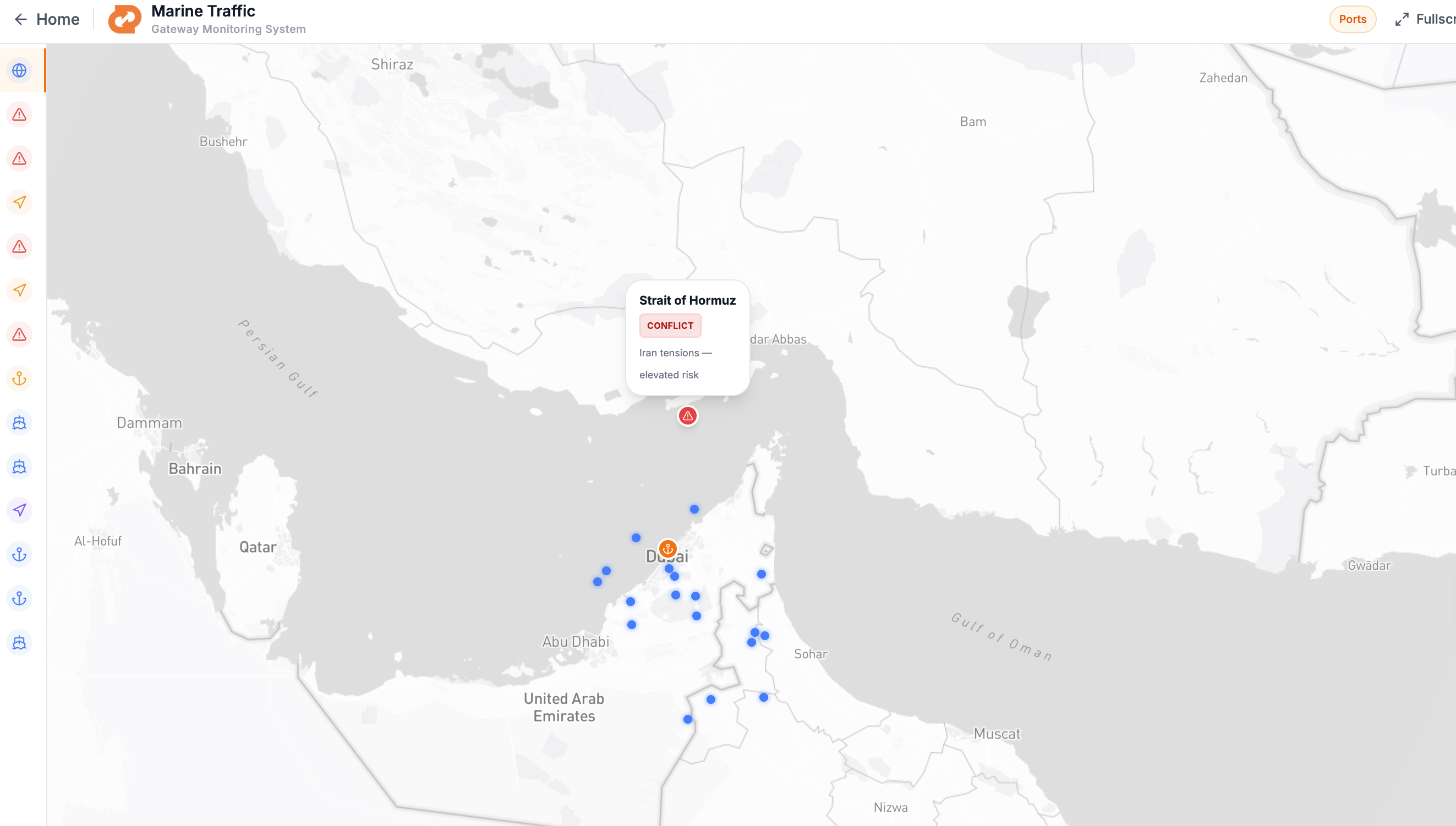
Track live vessel movements: gatewaylines.com/marine-traffic
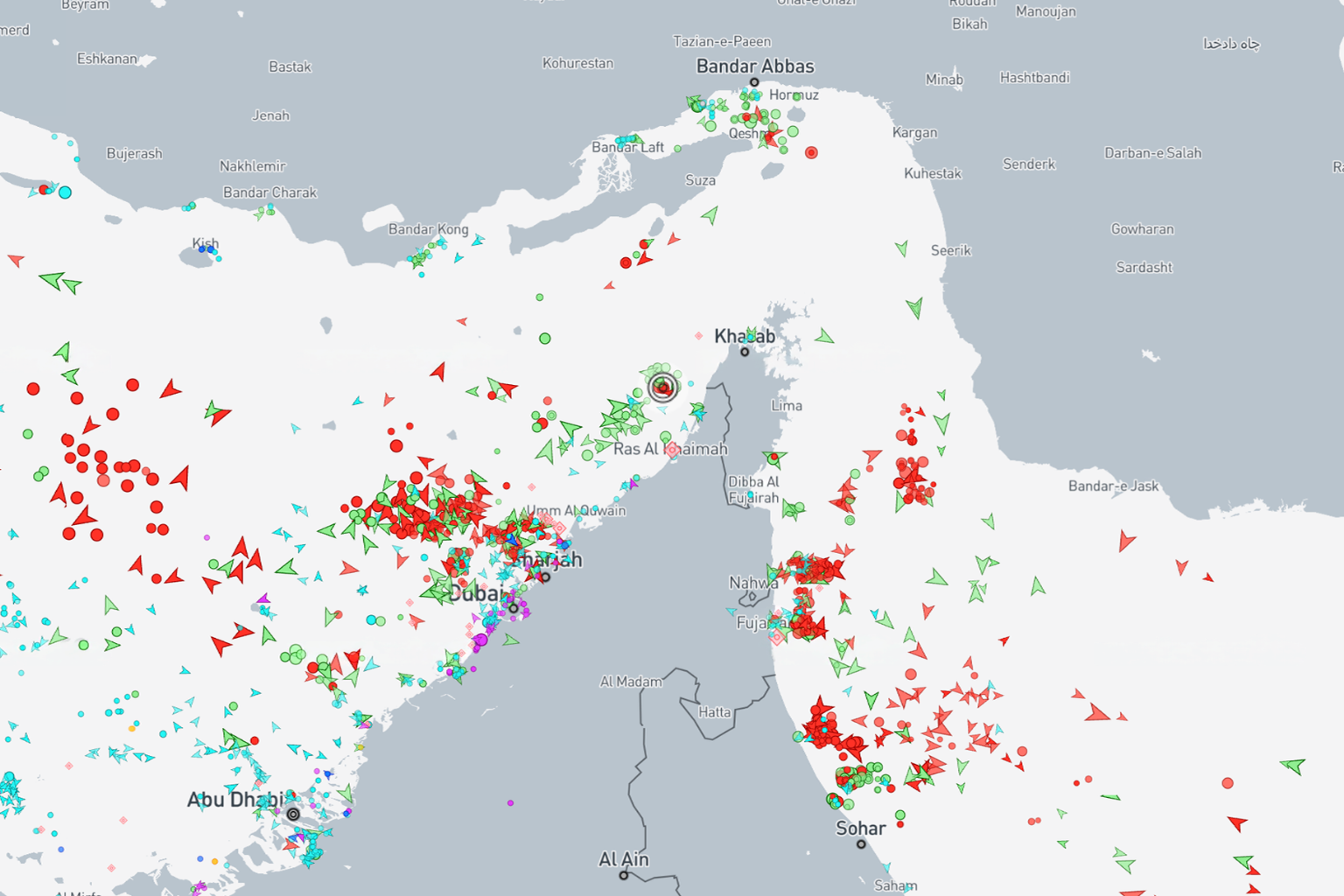
The Strait of Hormuz is commercially closed. That is not speculation — it is the operating reality for every shipper, carrier, and logistics provider touching the Persian Gulf today.
Since February 28, 2026, when the United States and Israel launched coordinated military strikes on Iran under Operation Epic Fury, the world's most critical maritime chokepoint has been effectively shut down. Iran retaliated with missile and drone strikes across the Gulf, and the Islamic Revolutionary Guard Corps declared the strait closed to all shipping.
What followed has been the most severe disruption to global energy and trade flows since the 1970s oil crisis.
This article breaks down where things stand today, what it means for your supply chain, and what your options are.
What Happened
On February 28, joint U.S.-Israeli airstrikes targeted Iranian military facilities, nuclear sites, and leadership — including the killing of Supreme Leader Ali Khamenei. Iran responded within hours with missile barrages against Israeli cities and U.S. military bases across the Gulf, including in the UAE, Qatar, and Bahrain.
By March 2, the IRGC officially confirmed the strait was closed, threatening any vessel that attempted passage. The U.S.-flagged tanker Stena Imperative was struck at port in Bahrain. War-risk insurance was pulled effective March 5, making transit economically impossible even for operators willing to accept the physical risk.
Within days, traffic through the strait collapsed from over 100 daily transits to near zero.
Where Things Stand Today — April 2, 2026
The situation has evolved significantly over the past month, and it continues to shift daily.
The numbers tell the story:
27 commercial ships have been attacked or reported incidents since March 1, including 13 tankers
Only 63 ships have transited the strait in the past two weeks — nearly all using an Iran-approved route around Larak Island, and the majority with Iranian links
Over 2,100 vessels remain stranded west of the strait, including 308 oil and gas vessels
Approximately 200,000 TEUs of container capacity remain trapped in the Persian Gulf
44,000+ businesses across 174 countries have at least one shipment exposed
Carrier status — all major lines remain suspended:
Maersk: All Hormuz transits suspended. Emergency freight increases in effect for all Gulf ports. Suez transits also paused.
MSC: Declared "End of Voyage" for all Arabian Gulf shipments. Customers must self-recover diverted cargo. Mandatory $800/container surcharge applied.
CMA CGM: All vessels in or en route to the Gulf ordered to shelter. Emergency conflict surcharge of $3,000/FEU for Gulf and Red Sea cargo.
Hapag-Lloyd: All Hormuz transits suspended. Guided to its first operating loss since the pre-pandemic era.
COSCO: Suspended transits despite initial speculation that Chinese-linked vessels would be exempt. Chinese container ships were forced to turn back on March 29 after the safe-passage arrangement collapsed.
War-risk insurance has been pulled. For a container vessel valued at $150 million, transit premiums jumped from $375,000 to $750,000 — costs that carriers pass directly to shippers. Without insurance, most operators simply cannot sail.
The Diplomatic Landscape
Today, April 2, more than 40 nations are meeting virtually in London — hosted by UK Foreign Secretary Yvette Cooper — to discuss diplomatic and political options for reopening the strait. The United States is notably absent from these talks.
Last night, President Trump addressed the nation and said the U.S. military mission in Iran is "nearing completion," but made clear that reopening Hormuz is not America's responsibility. His exact message: countries that depend on oil flowing through the strait "must grab it and cherish it."
Trump has given Iran an April 6 deadline to fully reopen the strait or face strikes on power plants and water infrastructure.
Meanwhile, Iran is pushing in the opposite direction. Tehran's parliament has approved a plan to impose transit tolls on vessels passing through the strait — reportedly $2 million per tanker — and is seeking international recognition of its sovereignty over the waterway. Five nations have been granted selective passage: China, Russia, India, Iraq, and Pakistan. Malaysia and Thailand have also negotiated access. Everyone else is locked out.
No country appears willing to open the strait by force while fighting continues.
What This Means for Your Supply Chain
If your freight touches the Persian Gulf in any way — origin, destination, or transshipment — you are affected. But the ripple
effects extend far beyond Gulf cargo.
Transit times are increasing across the board. Rerouting around the Cape of Good Hope adds 10 to 14 days to any voyage that would normally pass through the strait or the Suez Canal. Houthi forces resumed attacks on Red Sea shipping on February 28, eliminating any near-term prospect of Suez routing. Both of the Middle East's major maritime corridors are now simultaneously blocked for the first time in modern history.
Freight rates are climbing. Asia-Europe spot rates hit $2,883 per FEU in March. Emergency surcharges are stacking — bunker fuel surcharges, war-risk surcharges, and general rate increases are all being applied simultaneously. Bunker fuel prices have risen 35% at major fueling ports. Carriers are moving to ad-hoc pricing on many routes, with some quotes valid for only 24 hours.
Container availability is tightening. With 200,000+ TEUs trapped in the Gulf and vessels tied up on longer Cape routes, equipment shortages are emerging on trade lanes that have nothing to do with the Middle East. This is a global capacity squeeze.
Air freight capacity is down 39% on Asia-Pacific to Middle East and South Asia to Europe corridors. Rates from Cambodia, India, Bangladesh, Sri Lanka, and Pakistan have increased more than $1/kg since the conflict started.
The Rerouting Playbook
There is no quick fix. But there are options, each with trade-offs.
Cape of Good Hope routing is the primary workaround for Asia-Europe and Asia-Gulf cargo. It adds 10 to 14 days and significantly increases fuel costs. Most major carriers have already shifted the bulk of their capacity here. The route is getting crowded, and congestion at alternative Mediterranean ports is growing.
Oman's deep-water ports — Duqm, Salalah, and Sohar — are emerging as bypass hubs for Gulf-bound cargo. They sit outside the strait in the Arabian Sea. However, several drones struck Duqm and Salalah in March, damaging a fuel storage tank at Duqm. The risk is real but manageable for now.
Multimodal land-bridge solutions are the most creative option. Cargo can be routed to alternative gateways outside the strait and moved inland via bonded trucking and feeder networks. Saudi Arabia is rerouting some exports through its East-West pipeline to Yanbu on the Red Sea coast. Pakistan has formally requested this option. For non-energy cargo, overland connections from Oman and Saudi Arabia offer a viable but capacity-limited alternative.
Mediterranean entry points are surging. Med routes are growing three times faster than Northern Europe as the continent's gateway hierarchy redraws in real time. Shippers with flexibility on European destinations should evaluate Med routing.
Air freight makes sense for high-margin, low-volume, or time-sensitive goods. But capacity is limited and rates are at pandemic-era levels.
Industries Most Affected
Energy: 20% of global daily oil supply and significant LNG volumes normally transit the strait. Brent crude peaked at $126/barrel. QatarEnergy declared force majeure on all LNG shipments.
Fertilizer: Up to 30% of internationally traded fertilizers normally transit through the strait. Urea prices rose 20% in early March. There are no internationally coordinated strategic reserves for fertilizer, making this disruption harder to absorb than oil.
Container shipping: 10.7% of the global container fleet by TEU capacity was deployed to the Persian Gulf. Equipment shortages are cascading across trade lanes worldwide.
Pharmaceuticals and medical devices: Air freight disruptions have delayed deliveries for generic medicines and vaccines from India, a critical source for global healthcare supply chains.
Consumer electronics: Jebel Ali in Dubai is the primary transshipment hub for IT hardware across the Middle East, East Africa, and South Asia. That hub is effectively offline for Western-linked cargo.
What You Should Do Right Now
1. Assess your exposure. Map every shipment, supplier, and route that touches the Gulf, Red Sea, or Suez Canal. If you have cargo in transit through any of these corridors, contact your forwarder immediately. You can monitor live vessel positions at gatewaylines.com/marine-traffic.
2. Build buffer stock. Plan for at least 60 to 90 days of continued volatility. If you can pull forward inventory from your next order cycle, do it now.
3. Diversify your routing. If your current forwarder only offers one path, you need a second option. Cape routing, Med entry points, and multimodal solutions should all be on the table.
4. Lock in rates where possible. Spot rates are volatile and climbing. If you can secure contract rates on your primary lanes, do it before the next round of GRIs hits.
5. Calculate your landed cost before you book. With tariffs, surcharges, and rerouting costs stacking, the total cost of a shipment can change dramatically from week to week. Know your numbers before you commit.
6. Communicate with your customers. If your delivery timelines are affected, get ahead of it. Transparency builds trust.
How Gateway Lines Can Help
Gateway Lines is a federally licensed ocean freight forwarder (FMC License #034973NF) with dedicated space on MSC, CMA CGM, and Hapag-Lloyd. We built our platform specifically for moments like this — when visibility, speed, and accurate cost data are the difference between a supply chain that holds and one that breaks.
Live satellite tracking on every shipment, from booking to delivery
Real-time marine traffic monitoring — track global vessel movements at gatewaylines.com/marine-traffic
Duty calculator that shows your total landed cost before you book, not after you clear customs
Rate comparisons across multiple carriers and routes, updated in real time
Port arrival alerts so you're never surprised by schedule changes
Customs coordination with our licensed brokerage partner to keep clearance moving
We are monitoring the Strait of Hormuz situation daily and actively routing around it. If your current setup isn't giving you the visibility you need, we should talk.
Try our free tariff simulator: tariff.gatewaylines.com
Get a rate comparison on your busiest lane: gatewaylines.com | (844) 542-8392