HOME FURNISHINGS
Leaving China is what walked furniture into the tariff it was leaving to avoid
Upholstered furniture from Vietnam used to enter free. It does not now, and the change was not a rate increase, it was a rate creation: a duty applied to a line that previously had none. The industry spent years moving production out of China to escape an origin-based duty, and arrived in the destination just as a product-based one was written over the top of it.
Written for furniture and bedding importers, retail and hospitality buyers placing container programmes against a season, and the sourcing teams who moved production to Southeast Asia and now need to know what that actually costs.
What actually crosses the border
One shipment, 7 classification lines
Duty is assessed per article, not per shipment. Each line below is a live lookup against the same tariff engine that prices Gateway bookings, so the number you see is the number in force today rather than one printed on a page months ago.
| HTS | Part | Programs that can stack | Live rate |
|---|---|---|---|
| 9401.61.60 | Upholstered seating with wooden frames: sofas, armchairs, sectionalsThe line where the story starts. A free base rate plus a product-based action means the duty exists independently of where you moved production to, which is the opposite of how origin-based duties behave. | Column 1 MFNSection 232 timber (upholstered furniture)Section 301 (China origin) | Look up |
| 9403.60.80 | Wooden case goods: bedroom, dining, occasional furnitureChinese wooden bedroom furniture carries a long-standing antidumping order that can exceed every other programme on the line put together. It is the single largest number this chapter can produce. | Column 1 MFNSection 232 timberSection 301Antidumping / countervailing | Look up |
| 9403.20.00 | Metal furniture, frames, racks and shelvingMetal furniture leaves the timber action and enters the metals one. A range with wooden and metal variants spans two different programmes on the same order. | Column 1 MFNSection 232 (steel derivative)Section 301 | Look up |
| 9404.21 | Mattresses of cellular rubber or plasticsMattresses are NOT in the timber action. They pick up the origin-based forced-labor layer instead, so bedding and the bed frame beside it in the same container are dutied by entirely different mechanisms. Antidumping orders reach a number of bedding origins and attach to the exporter, so this line is worth verifying against the current Commerce order list rather than assumed. | Column 1 MFNSection 301 forced laborAntidumping / countervailing | Look up |
| 9404.29 | Mattresses of other materials, including innerspring | Column 1 MFNSection 301 forced laborAntidumping / countervailing | Look up |
| 9404.90 | Quilts, comforters, pillows and bedding | Column 1 MFNSection 301 forced labor | Look up |
| 9403.91 | Furniture parts shipped knocked down or as replacementsParts follow their own line, so a knocked-down programme does not automatically inherit the classification of the assembled article it becomes. | Column 1 MFNSection 232 timberSection 301 | Look up |
Where it goes wrong
Problems specific to this commodity
This is the one commodity that cubes out instead of weighing out
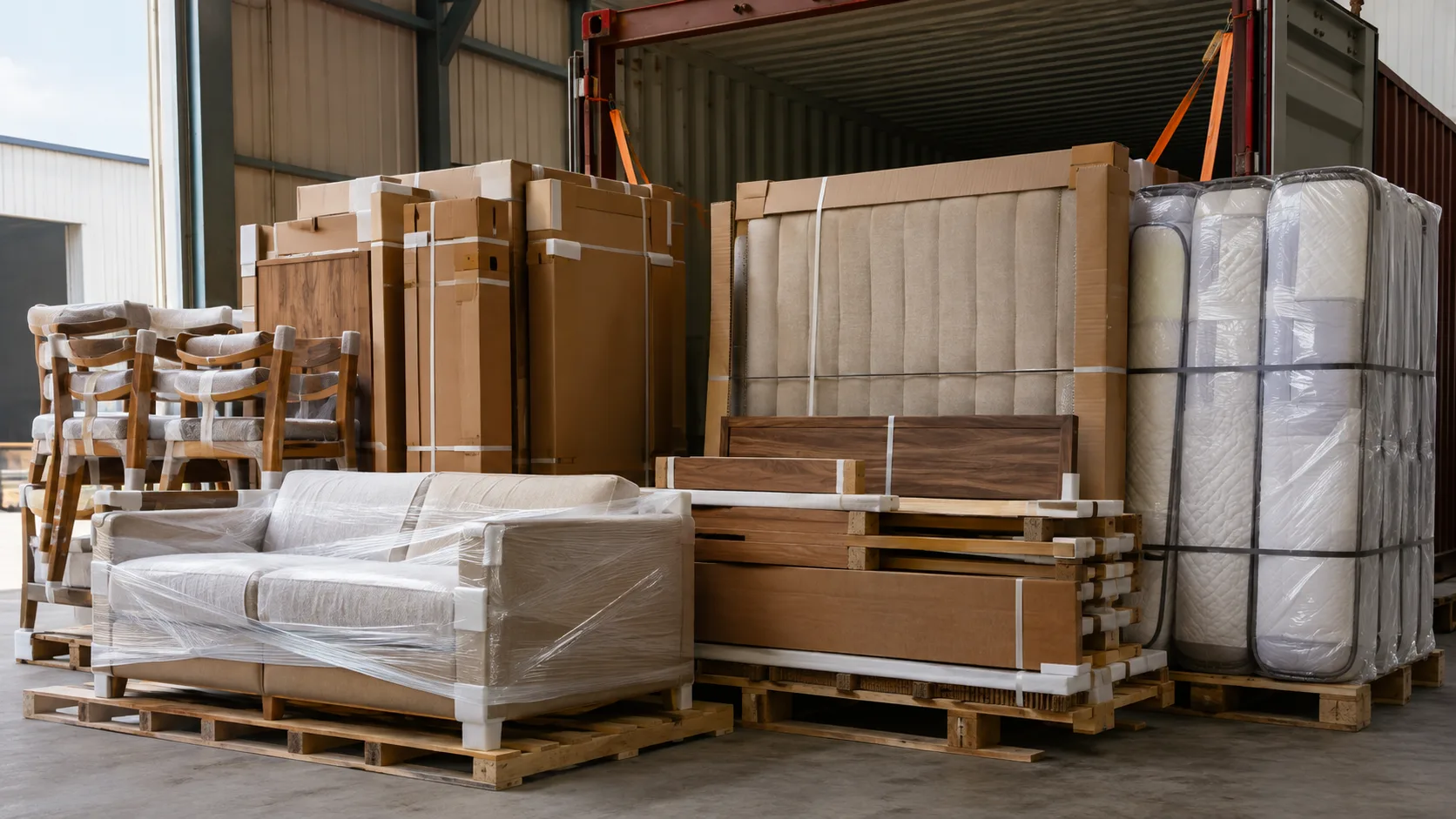
Sofas, case goods and mattresses fill a container long before they trouble the payload limit, which is the reverse of steel, stone and batteries. That makes high cube equipment and the packing arrangement the whole game, and it makes knocked-down versus assembled a freight decision as much as a manufacturing one. The right question here is cubic metres per unit and how the shapes nest, not tonnes.
Furniture and bedding are two different tariff systems in one container
A wooden bed frame sits under the timber action. The mattress that goes on it does not, and picks up an origin-based duty instead. A metal frame leaves both and enters the metals programme. One purchase order across a bedroom set can therefore span three different mechanisms, and a single blended rate across the container will be wrong on at least two of them.
Antidumping is exporter-specific, and this chapter holds the largest numbers
Antidumping and countervailing rates attach to the producer and exporter pair rather than the country, and on some furniture and bedding lines they reach levels that dwarf every tariff programme combined. Two suppliers in the same country shipping the same article can be worlds apart. This is knowable before the order and effectively unfixable after it, so it belongs at supplier qualification rather than at entry.
A trade agreement no longer tells you what you will pay
The intuition that an agreement partner is the safe origin does not survive a product-based action. Origins covered by a negotiated ceiling can land materially below origins that importers think of as duty free, because a free trade agreement removes the ordinary duty and does not, by itself, remove a separate action layered on top. The ranking of your candidate origins may be the reverse of what the agreement map suggests, and it is worth checking rather than assuming.
The rate you are modelling has a scheduled change on it
The timber action carries a step-up dated 1 January 2027. Programmes being priced now against multi-season buying, or against contracts that span that date, are being modelled on a rate with a known expiry. Any landed cost built for 2027 delivery should be run twice, once on the rate in force and once on the scheduled one, so the exposure is a decision rather than a discovery.
What Gateway does about it
Priced before the PO, tracked to the site
Landed cost per line, before the season is committed
Run each line of the range through the same tariff engine that prices our own bookings and see which programmes attach to that exact code and origin. Compare candidate origins side by side, because on this chapter the ordering frequently is not what the agreement map implies.
Published lane rates, not a rate on request
Our ocean rates are published by lane and container size and refreshed weekly from live carrier reads, so you can build a season plan against real numbers without a sales call.
Volume-limited load planning
Furniture is a packing problem rather than a weight problem. Plan the arrangement, compare knocked down against assembled, and see the real cubic utilisation before the equipment is booked rather than after the first container arrives half air.
Customs and compliance across three programmes at once
Entry filing, ISF and classification support for containers that span timber, metals and origin-based actions simultaneously, including the supplier-level questions that decide antidumping exposure before an order is placed.
Tracking and cargo cover for a commodity that damages
Furniture arrives scuffed, crushed or short more often than dense freight does, and a claim is only as good as its evidence. Cover is arranged with the booking, and satellite tracking with last free day alerts keeps a season delivery from sitting at the terminal.
Common questions
- Why does furniture from Vietnam now pay duty when it used to be free?
- Because the duty is product-based rather than origin-based. The Section 232 timber action applies to listed furniture articles regardless of where they were made, so a line that entered at a free ordinary rate can become dutiable without its country of origin changing anything. This is the specific reason the shift of production out of China did not avoid it: the industry moved to escape an origin-based duty and the new action attaches to the product instead.
- Does USMCA or a free trade agreement exempt furniture from the tariff?
- Not by itself. An agreement removes or reduces the ordinary Column 1 duty. It does not automatically remove a separate action layered on top, which is why some agreement origins pay the action in full while certain other origins sit under a negotiated ceiling and land lower. The practical effect is that the ranking of candidate origins can be the reverse of what the agreement map suggests, so it is worth pricing each origin in the calculator rather than reasoning from the agreement.
- Are mattresses covered by the same furniture tariff?
- No, and this is the most common mistake on a mixed bedroom container. Mattresses are not in the timber action. They carry the ordinary duty plus an origin-based forced-labor duty, and antidumping orders reach a number of bedding origins on top of that. A bed frame and the mattress on it are dutied by different mechanisms, so they need pricing separately even though they ship together.
- What is the largest duty risk on a furniture import?
- Antidumping, without much competition. Rates attach to the producer and exporter pair rather than the country, and on some wooden furniture and bedding lines they exceed every tariff programme combined. Because they are exporter-specific they are decided at supplier selection, not at entry, and they are the exposure most often discovered after the goods have already shipped.
- How many units fit in a container?
- Furniture is one of the few commodities where volume rather than weight decides it, so the answer comes from the packing arrangement and from whether the goods ship assembled or knocked down. High cube equipment and the nesting of the shapes usually matter more to the landed cost per unit than the freight rate does.
Price the structure before you buy it
Send the bill of materials and the origin. You get duty per line, a published lane rate, and a packing plan that respects the payload limit, before the PO is committed.