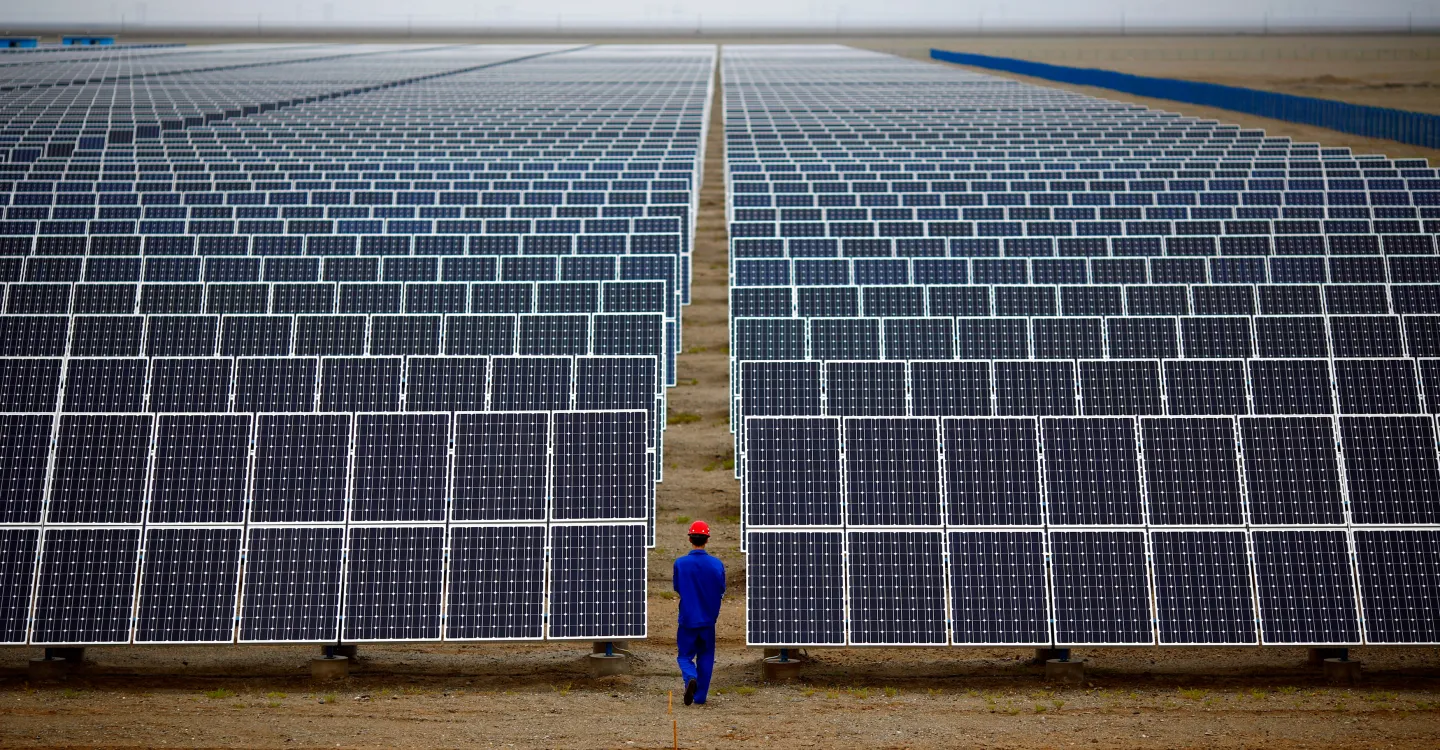
A solar panel sitting in a detention bay at the Port of Los Angeles does not generate a single watt. Yet that is exactly where a growing share of America's solar supply has ended up. Solar equipment now makes up the large majority of the value of all shipments stopped at the U.S. border under the Uyghur Forced Labor Prevention Act, with billions of dollars in modules held for inspection in recent years, according to U.S. Customs and Border Protection data reported by Reuters. Behind each of those holds is a project that slipped its schedule, a crew with nothing to install, and a clean-energy milestone that moved further away.
That is the part of the solar story that rarely makes the headlines.
Building a cleaner grid is not only about panels and policy. It is about whether the hardware actually arrives, on time, cleared, and intact. For a utility-scale solar farm, the stretch from an Asian factory to a field in Texas or Arizona is the hardest mile of the entire
project.
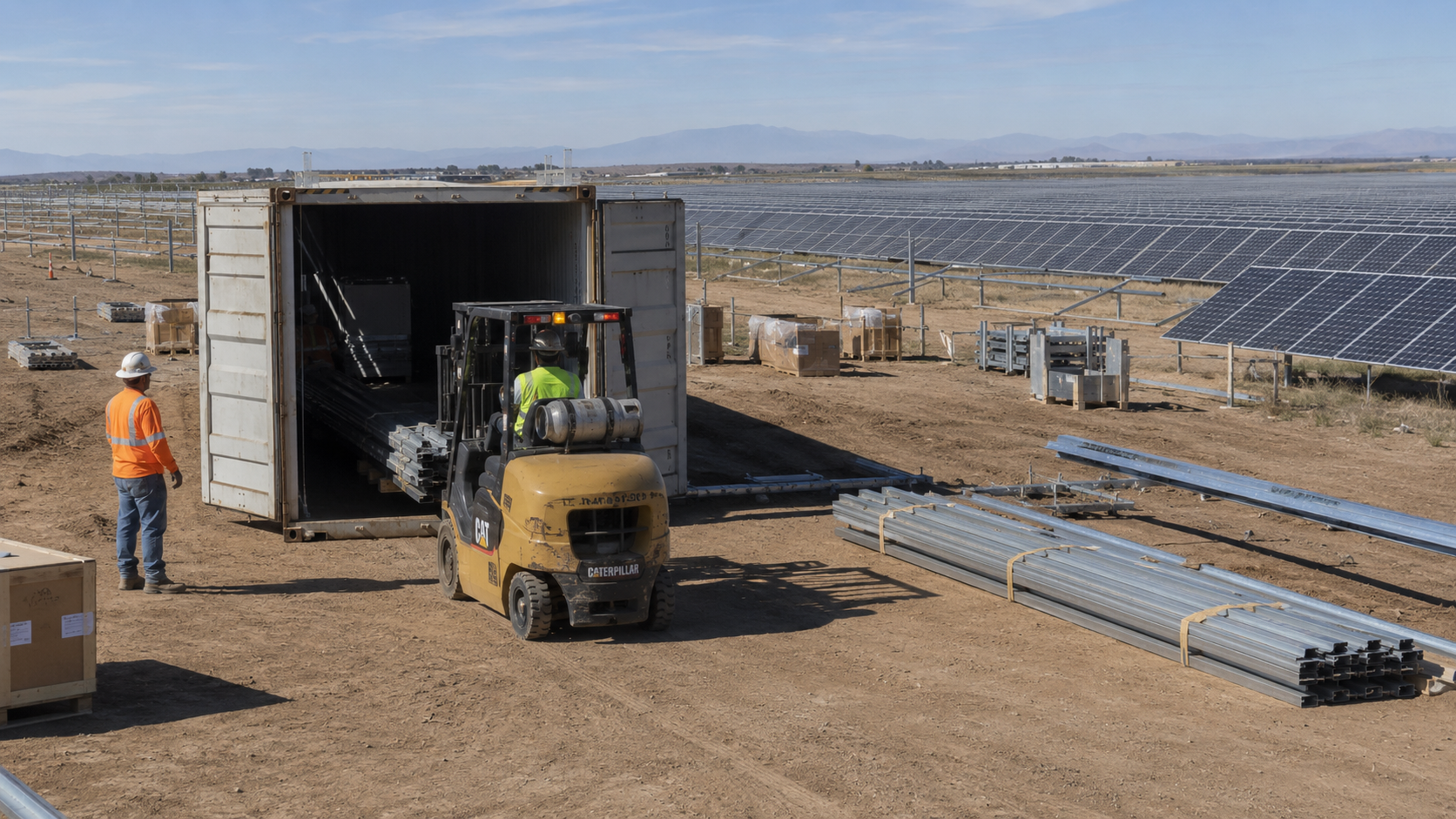
Here is why it is so unforgiving, and what it takes to get it right.
The clock is the enemy
A utility-scale solar project is a logistics operation disguised as a construction site. A single farm can require thousands of modules, plus inverters, racking, and balance-of-system components, all arriving in sequence to match the build. Crews, equipment rentals, and grid-interconnection dates are scheduled to the day. Power purchase agreements and federal tax-credit deadlines, several of which tighten through 2026 and 2027, put real money on hitting the energization date.
When a container is stuck at the port, the cost does not stay at the port. Crews stand idle. Cranes sit. Milestones slip. A delay measured in weeks at the dock can become a delay measured in quarters on the project. The freight is a small line item, but its timing decides the fate of everything around it.
The compliance minefield
Solar is one of the most heavily regulated products an importer can touch, and the rules are layered on top of one another.
The biggest risk is forced-labor enforcement. Under the UFLPA, there is a rebuttable presumption that any module linked to polysilicon from China's Xinjiang region was made with forced labor, and CBP will detain shipments unless the importer can prove otherwise with clear and convincing evidence. Because so much of the world's polysilicon traces back to that region, even panels assembled in Malaysia, Vietnam, or Thailand draw heavy scrutiny, and in practice those three countries account for most of the solar shipments CBP has stopped. Clearing a panel means documenting the entire chain, from polysilicon to wafer to cell to finished module, before the cargo ever sails.
Then comes the tariff stack. Solar cells and modules can face Section 201 safeguard duties, Section 301 duties on Chinese-origin goods, antidumping and countervailing duties on product from China and Southeast Asia, and a temporary Section 122 surcharge, layered together into effective rates that can run from roughly 30 percent to well over 60 percent depending on origin and configuration.
Critically, origin is set by where the solar cells are made, not where the panel is assembled, so a substantial-transformation analysis and the correct HTS classification are the difference between a clean entry and a costly surprise.
Get any of this wrong and the panels do not just cost more. They stop moving.
What control actually looks like
The projects that stay on schedule treat freight, compliance, and final-mile delivery as a single controlled process rather than three separate handoffs. In practice that means three things.
First, front-load the hard part. The supply-chain documentation, the HTS classification, and the full landed cost, tariffs included, should be settled before the cargo ships, not discovered at the border. Modeling the duty exposure up front turns a nasty surprise into a line on a budget.
Second, never lose sight of the box. Real-time, satellite-level tracking on every container means a developer always knows where the hardware is and can plan crews and cranes around it instead of guessing. Visibility is what turns logistics from a gamble into a schedule.
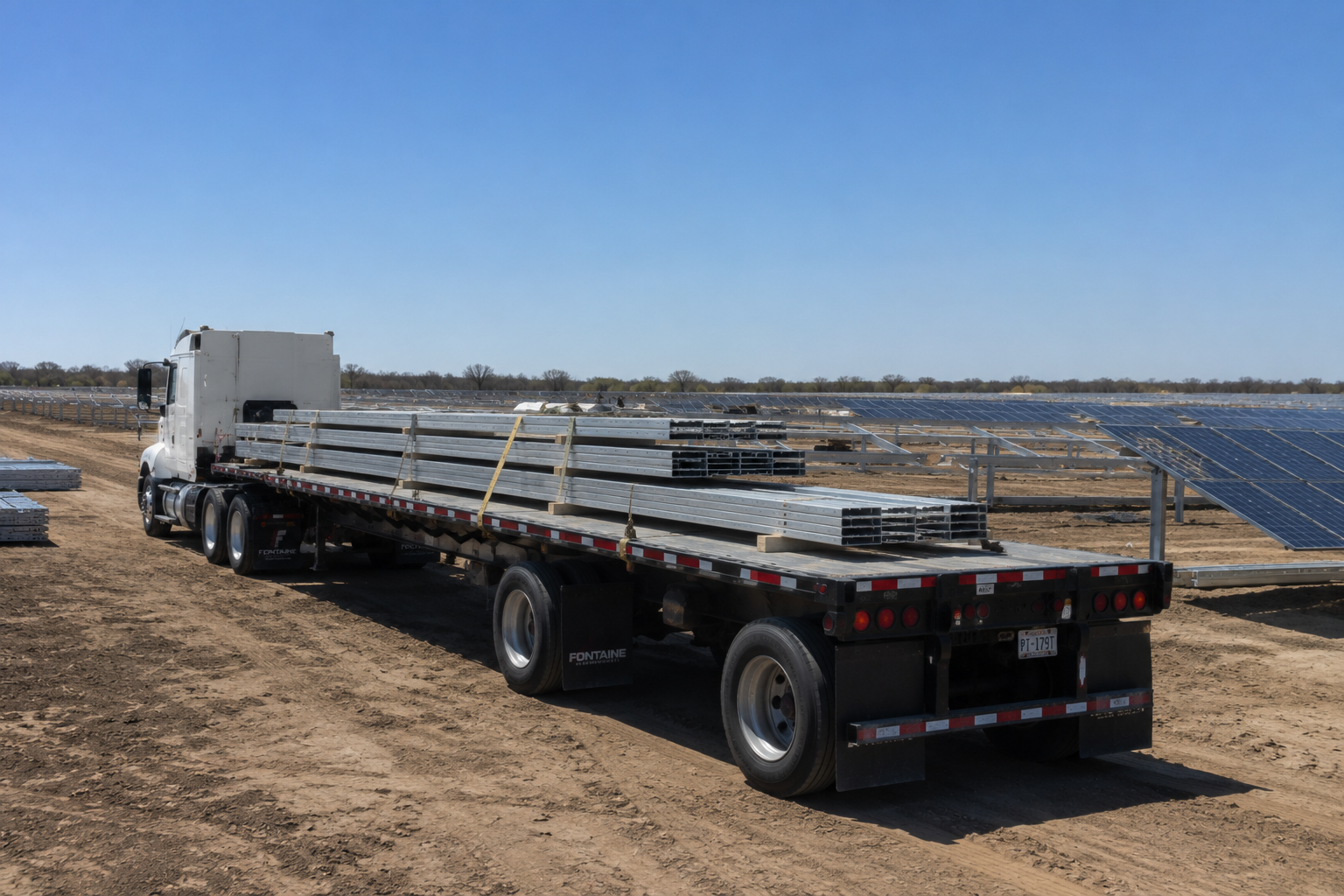
Third, sequence the delivery to the build. Customs clearance and port-to-site drayage, often to a remote location, should be timed to the construction phases, so panels arrive when the field is ready for them, not so early they sit baking in a yard and not so late they idle a crew.
Moving clean power, cleanly
Every panel that clears quickly and lands on schedule is clean power coming online sooner. That is the quiet engine underneath the energy transition, and it runs on precision.
Gateway Lines was built for exactly this kind of move: complex origins, heavy compliance, and timelines that do not forgive. You can model the tariff exposure and landed cost on any solar lane in minutes using the tools at tariff.gatewaylines.com, and from there Gateway coordinates the ocean freight, the customs entry, and the delivery to your site as one tracked, controlled process. Because on a solar project the goal is simple: get the hardware to the field, on time and cleared, so the only thing left to do is plug in.
Learn more at gatewaylines.com.
Sources: U.S. Customs and Border Protection data on UFLPA detentions, reported by Reuters (February 2026); industry analysis of solar import tariffs and UFLPA compliance from PV-Tech and trade-compliance advisories; Center for Strategic and International Studies, "Assessing the United States' Solar Power Play." Figures and rules change frequently; importers should confirm current duty rates and compliance requirements before shipping.