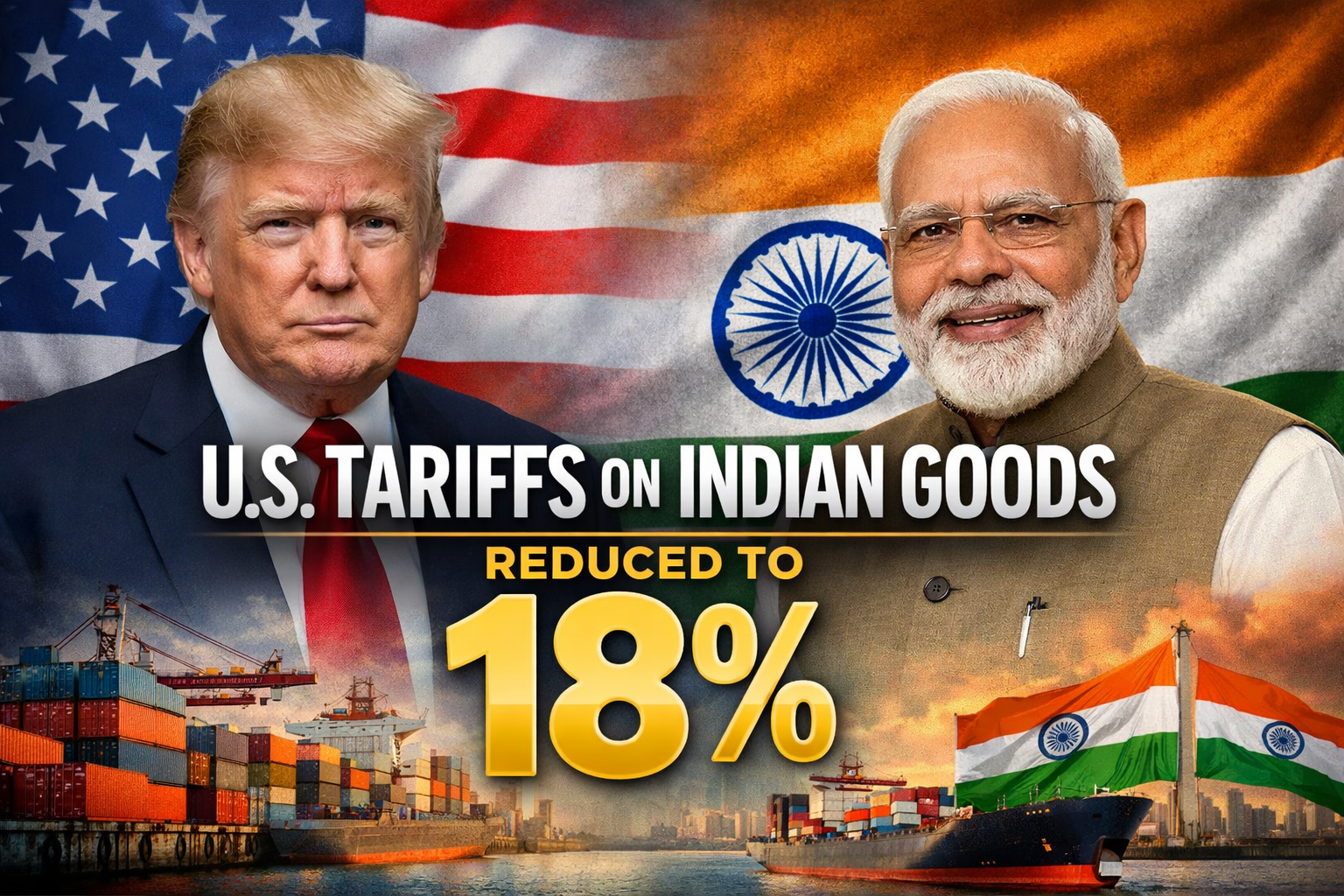
The announcement, made by former U.S. President Donald Trump and acknowledged by Indian leadership, represents one of the most substantial tariff adjustments in recent U.S.–India trade relations.
While administrative implementation details will follow through formal regulatory processes, the agreement itself has been publicly confirmed by both sides and is already influencing global trade planning and supply-chain strategy.
Why the 18% Tariff Reduction Matters
For years, Indian exports to the United States have faced elevated duties due to a mix of MFN rates, safeguard actions, and retaliatory trade measures. The reduction to an 18% tariff level materially improves the cost structure for U.S. importers sourcing from India.
Industries most likely to see immediate impact include:
Industrial machinery and components
Automotive parts and assemblies
Pharmaceuticals and medical products
Consumer goods, textiles, and engineered materials
For importers, the change directly affects landed cost, sourcing decisions, and long-term supplier strategy, especially for companies seeking diversification away from China-centric supply chains.
Freight and Supply Chain Implications
Tariff changes of this magnitude historically lead to rapid shifts in shipping behavior, particularly on India–U.S. trade lanes. As tariff pressure eases, import volumes typically rise, driving changes in:
Ocean freight demand from major Indian export ports
Capacity utilization and spot-rate movement
Port congestion risk during transition periods
Demand for accurate tariff and landed-cost forecasting
In practice, tariff policy does not operate in isolation. Shippers must account for duties, freight rates, accessorial charges, fuel surcharges, and timing—making real-time trade intelligence essential.
How Gateway Lines Supports Tariff-Aware Shipping Decisions
At Gateway Lines, tariff visibility and trade intelligence are embedded directly into the platform. Rather than reacting after costs change, Gateway enables shippers to model tariff impacts, evaluate alternative sourcing lanes, and forecast total landed cost with confidence.
Gateway’s technology-driven approach supports:
Tariff-aware pricing and cost analysis
Landed-cost transparency across international lanes
Scenario modeling for alternative origins and routings
FMC-aligned tariff publishing and compliance visibility
As the U.S.–India trade relationship evolves under the newly announced agreement, Gateway Lines continues to equip customers with the tools needed to adapt quickly and protect margins.
Looking Ahead
The reduction of U.S. tariffs on Indian goods to 18% signals renewed momentum in U.S.–India trade relations and reinforces India’s role as a strategic manufacturing and export partner. For shippers and logistics professionals, the message is clear: trade policy is shifting, and supply chains must adjust accordingly.
Gateway Lines will continue monitoring implementation details and trade flow impacts as the agreement moves through formal execution stages.