ENERGY STORAGE
The battery is the cheapest thing in a battery container
Every guide to shipping lithium-ion is written about the cells, and the cells are the one line in a DC block that escapes both the forced-labor duty and the metals tariffs. The cabling, the thermal unit and the steel enclosure each land higher. If you price a battery import by pricing the battery, you have priced the cheapest thing in the box.
Written for storage developers and EPCs buying DC blocks against an interconnection date, integrators importing cells and balance of system separately, and the procurement teams who inherit a dangerous goods shipment somebody else booked.
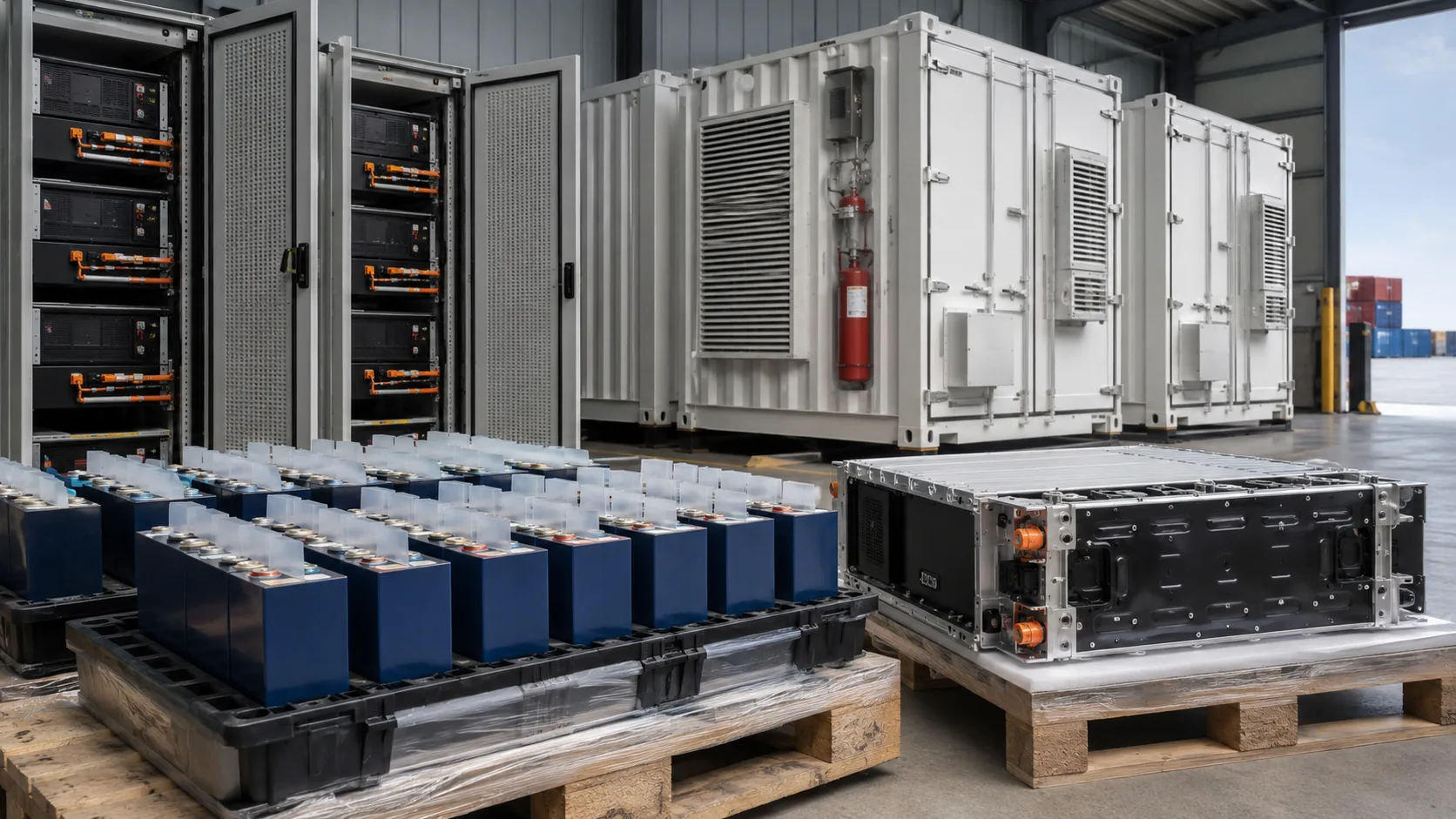
What actually crosses the border
One shipment, 7 classification lines
Duty is assessed per article, not per shipment. Each line below is a live lookup against the same tariff engine that prices Gateway bookings, so the number you see is the number in force today rather than one printed on a page months ago.
| HTS | Part | Programs that can stack | Live rate |
|---|---|---|---|
| 8507.60.00.20 | Lithium-ion cells, modules and racksThe headline line, and the cheapest major one. It carries the Section 301 battery action but is EXEMPT from the Section 301 forced-labor duty as a product listed under U.S. note 52, and it picks up no Section 232. That exemption is the whole reason the rest of this table outranks it. | Column 1 MFNSection 301 (EV battery action) | Look up |
| 8544.42.90 | DC cabling, harnesses and fitted conductorsRoutinely the highest-rated line in the entire container. Copper conductor pulls the metals programme on top of the origin duty, and cable is bought by the reel as an afterthought to the cells. | Column 1 MFNSection 301Section 232 metals | Look up |
| 8415.82.01 | Thermal management and HVAC unitsAn air conditioner attached to a battery is still an air conditioner for classification, and it carries the metals programme the cells do not. | Column 1 MFNSection 301Section 232 metals | Look up |
| 7326.90.86 | Steel enclosure, frames, skids and structural partsThe box the system arrives in is its own import, and unlike the cells it is not on the note 52 exemption list. | Column 1 MFNSection 301Section 301 forced labor | Look up |
| 8537.10.91 | Battery management systems and control panels | Column 1 MFNSection 301Section 301 forced labor | Look up |
| 8536.90.40 | Connectors, busbars, disconnects and protection devices | Column 1 MFNSection 301Section 301 forced labor | Look up |
| 8504.40.95 | Power conversion system, inverters and rectifiersWhere the PCS ships separately from the block it is a separate entry with its own exposure, and pairing decisions made for engineering reasons quietly change the duty bill. | Column 1 MFNSection 301 | Look up |
Where it goes wrong
Problems specific to this commodity
Cells are dense, and a full block weighs out
Lithium-ion racks reach the container payload ceiling well before they fill the volume, in the same way stone and steel do. Plan the load from tonnage against a real packing arrangement rather than from cubic metres, and check the payload against the specific box: of the standard sizes the 20ft carries the highest, which is why dense cargo frequently buys the smallest container on purpose.
A DC block is not one import, and the cells are the cheap part
Cells, cabling, thermal, enclosure, BMS, connectors and the power conversion system each classify separately and each pick up a different combination of programmes. The cells sit on a note 52 exemption that the ancillaries do not, and the metal-bearing parts add the Section 232 programme on top. Quoting the container at the cell rate understates it, and the gap lands on lines nobody costed.
The 30% state-of-charge rule everybody quotes is an air rule
Most lithium-ion shipping guidance is written for air freight, where a state-of-charge ceiling applies. Ocean carriage under the IMDG Code does not impose one. What ocean does require is Class 9 declaration, UN specification packaging under P903 or LP903, and a UN 38.3 test summary available on request. Individual carriers still set their own acceptance terms, so the constraint is real, it is just not the constraint the internet describes.
Class 9 narrows who will carry it, and that decides the schedule
Not every service accepts dangerous goods, and the ones that do allocate limited slots and want the paperwork earlier than a normal booking. On a project with an interconnection date behind it, the binding constraint is usually acceptance and slot availability rather than rate. Booking late on a DG cargo does not cost more, it simply does not sail.
Dangerous goods cannot quietly sit at the terminal
A Class 9 container that misses its collection window is not just accruing demurrage, it is occupying a hazardous storage position with its own rules and its own charges. Last free day management matters more on this commodity than on almost anything else, and the delivery point is usually a site pad reached by crane and lowboy rather than a dock door.
What Gateway does about it
Priced before the PO, tracked to the site
Landed cost across the whole block, not just the cells
Run every line of the bill of materials through the same tariff engine that prices our own bookings and see which programmes attach to each code and origin, including which lines carry an exemption and which do not. The expensive surprises on this commodity are always in the balance of system.
Published lane rates, not a rate on request
Our ocean rates are published by lane and container size and refreshed weekly from live carrier reads, so the number is visible without a sales call and it is the same number our booking quotes use.
Weight-limited load planning
Plan dense cargo against real payload limits rather than volume, and compare box sizes on the cargo you actually have before the equipment is booked.
Dangerous goods booking and documentation
Class 9 carriage arranged with the declaration, packaging and test documentation handled as part of the booking rather than as a compliance problem discovered at the cut-off, on services that actually accept the cargo.
Tracking and last free day alerts on hazardous cargo
Satellite container tracking with last free day alerts, because a dangerous goods container sitting past its window is a more expensive problem than an ordinary one and a less forgiving one.
Common questions
- What HTS code do lithium-ion battery cells fall under?
- Lithium-ion cells, modules and racks generally fall under 8507.60, most commonly 8507.60.00.20 for the storage-scale product. The rest of a battery energy storage system does not follow that code: cabling, thermal units, enclosures, battery management systems, connectors and the power conversion system each classify under their own headings. A single DC block routinely spans seven or more lines, so run the specific parts through the calculator rather than applying the cell code to the container.
- Why is the cable more expensive to import than the battery?
- Because of which programmes attach to each. The cells carry the Section 301 battery action but are exempt from the Section 301 forced-labor duty as a product listed under U.S. note 52, and they attract no Section 232. Copper-bearing cabling and metal-bearing thermal units pick up the metals programme on top of the origin duty, and the enclosure, the BMS and the connectors are not on the exemption list the cells sit on. The result is that the ancillary lines land above the cells. Price the specific codes and origin in the calculator, because the programmes and the lists move.
- Do lithium batteries need a state of charge below 30% to ship by sea?
- No. The 30% state-of-charge ceiling is an air freight rule and it is the single most repeated piece of misinformation about ocean battery cargo. Carriage under the IMDG Code does not impose a state-of-charge limit. It does require Class 9 declaration, UN specification packaging under P903 or LP903, and a UN 38.3 test summary available on request, and individual carriers set their own acceptance conditions on top of that.
- How long does it take to book a Class 9 battery shipment?
- Longer than an ordinary booking, and the reason is acceptance rather than transit. Not every service carries dangerous goods, the ones that do allocate limited slots, and the documentation is wanted earlier. On a project with a fixed energisation date the practical constraint is usually which sailings will take the cargo at all, which is a question worth asking before the purchase order rather than after it.
- Can you deliver a DC block to a project site?
- Yes. Storage blocks are delivered onto a pad by crane and lowboy on a commissioning sequence, not into a warehouse, and on dangerous goods the terminal side needs managing too because a Class 9 container cannot simply wait. Routing, equipment and the delivery method are decided together rather than treated as a separate leg after arrival.
Price the structure before you buy it
Send the bill of materials and the origin. You get duty per line, a published lane rate, and a packing plan that respects the payload limit, before the PO is committed.