RENEWABLES
Freight and landed cost for solar racking that is priced by the ton, not the cube
Racking, torque tubes, piles, rails and tracker hardware are dense steel and aluminum. They hit the container weight limit long before they fill it, and they carry metals duties that can exceed the ocean freight. Both are solvable if they are priced before the PO, not after the arrival notice.
Built for the people who actually own this problem: procurement and supply chain at racking and tracker manufacturers, and the EPCs buying structure into a project with a fixed mechanical completion date.
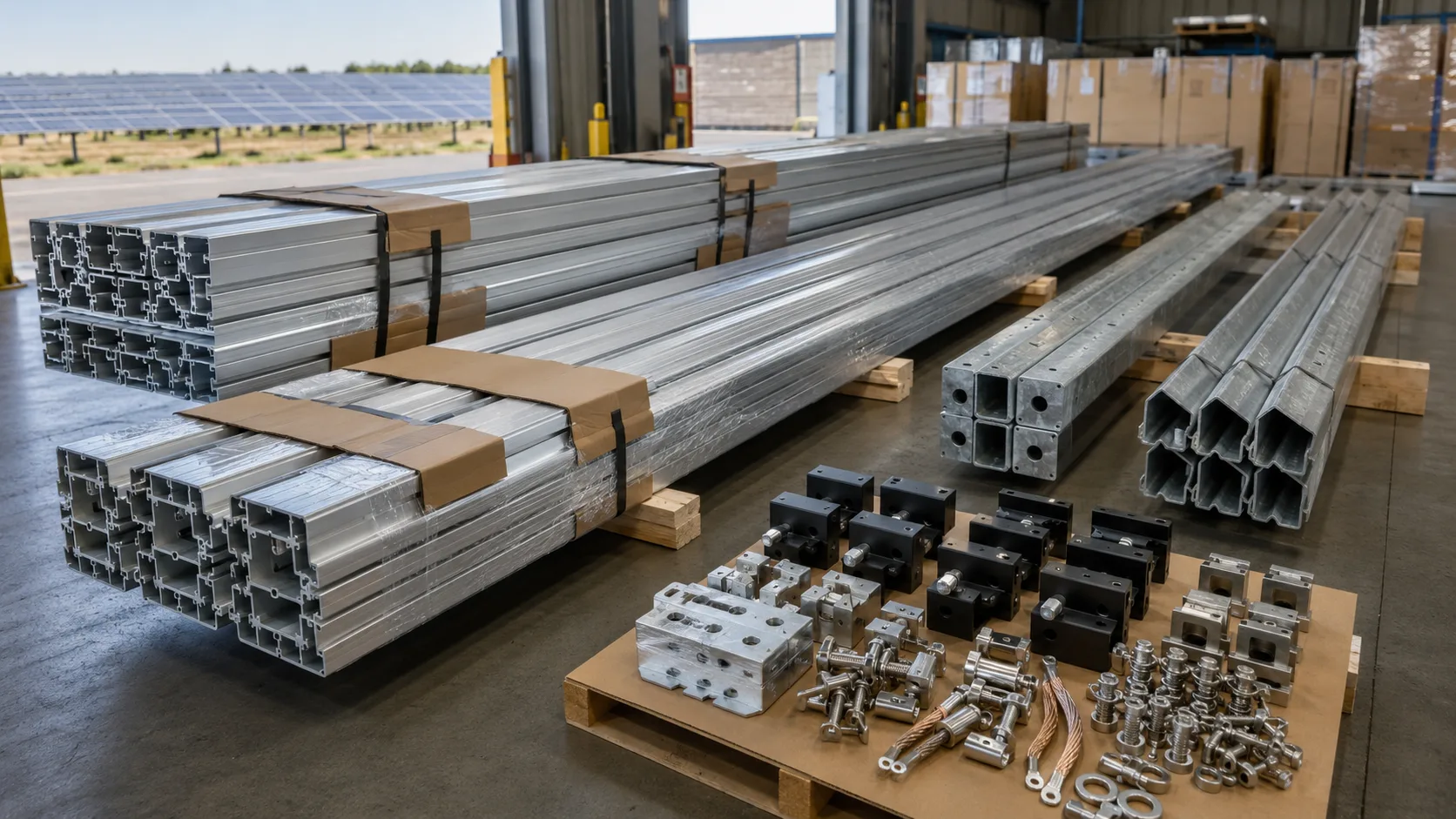
What actually crosses the border
One shipment, 6 classification lines
Duty is assessed per article, not per shipment. Each line below is a live lookup against the same tariff engine that prices Gateway bookings, so the number you see is the number in force today rather than one printed on a page months ago.
| HTS | Part | Programs that can stack | Live rate |
|---|---|---|---|
| 7308.90.95 | Steel structures and parts: torque tubes, purlins, driven piles, bearing housings, module railsThe structural core of a fixed-tilt or tracker system, and where most of the tonnage and most of the duty sits. | Column 1 MFNSection 232 steelSection 301 (China origin) | Look up |
| 7610.90.00 | Aluminum structures and parts: module rails, mid and end clamps, splicesAluminum carries its own 232 program with its own rate and its own partner carve-outs. It is not interchangeable with the steel line. | Column 1 MFNSection 232 aluminumSection 301 (China origin) | Look up |
| 7318.15 | Bolts, screws, nuts and fastenersThe single most expensive line per dollar of goods. Fasteners are a small share of BOM value and can be the largest share of the duty bill, because antidumping orders are exporter-specific and reach multi-hundred-percent levels on some origins. Never assume the mill certificate settles it; the exporter of record decides the rate. | Column 1 MFNSection 232 derivativeSection 301Antidumping / countervailing | Look up |
| 8482.10 | Ball and thrust bearings for tracker pivots | Column 1 MFNSection 301Antidumping / countervailing | Look up |
| 8501.31 | DC motors and slew drives for tracker actuation | Column 1 MFNSection 301 | Look up |
| 8541.43 | Photovoltaic modules, where the same project imports themModules move on a different policy track from the structure that holds them. A project can be clean on racking and exposed on modules, or the reverse. | Column 1 MFNSection 301SafeguardAntidumping / countervailing | Look up |
Where it goes wrong
Problems specific to this commodity
The container weighs out before it cubes out
A 40ft high cube tops out at 28,200 kg of payload. Galvanized torque tubes and driven piles reach that with the box visibly half empty, so a plan built on volume books containers that legally cannot load. The number that matters is payload against a real packing plan, not cubic metres, and the answer changes with every gauge and coating change.
Duty is decided by the part, not the shipment
One racking shipment can span structural steel, aluminum extrusion, fasteners, bearings and motors, and each of those sits under a different program. Section 232 applies to metals, Section 301 applies by origin, and antidumping applies by exporter. Quoting the shipment at a single blended rate is how a landed cost model ends up wrong by more than the freight.
Antidumping exposure is exporter-specific, not country-specific
Two suppliers in the same country, shipping the same fastener, can carry rates that differ by orders of magnitude, because antidumping rates attach to the producer and exporter combination rather than the origin. This is the exposure most often missed at PO stage, and it is only knowable before you buy.
A late container idles a construction crew, not a warehouse
Racking is installed on a schedule with a mechanical completion date behind it. Structure that lands late does not sit in inventory, it stops pile driving and module install. That makes berth-to-site visibility and last free day management worth more on this commodity than a marginally cheaper rate.
The delivery address is a field, not a dock
Project sites are rural, frequently without a forklift, a dock or a paved approach, and they take delivery in an install sequence rather than all at once. That is a different drayage conversation from a distribution centre, and it needs to be part of the routing decision rather than a surprise at the destination port.
What Gateway does about it
Priced before the PO, tracked to the site
Landed cost per HTS line, before the PO
Run each line of the bill of materials through the same tariff engine that prices our own bookings, and see the duty programs that stack on that specific code and origin. Change the sourcing country and watch the number move before you commit to it.
Published lane rates, not a rate on request
Our ocean rates are published by lane and container size and refreshed weekly from live carrier reads. You can see the number for your lane without a sales call, and it is the same number our booking quotes use.
Weight-limited load planning
Plan the box against real payload limits and get a packing plan that respects the 28,200 kg ceiling and the axle rules behind it, rather than discovering the problem at the terminal scale.
Customs and compliance on the metals programs
Entry filing, ISF, and classification support for shipments that cross several duty programs at once, including the documentation that metals entries actually get asked for.
Container tracking to the project, not to the port
Satellite container tracking with last free day alerts, so structure arriving against an install sequence is visible while there is still time to act on it.
Common questions
- What HTS code does solar racking fall under?
- Steel mounting structures and their parts generally fall under heading 7308, most commonly 7308.90.95, and aluminum structures under 7610.90.00. Fasteners, bearings and tracker motors classify separately under their own headings rather than following the structure. Classification follows what the article IS, so a torque tube and the bolt that holds it do not share a code, and a single shipment routinely spans several. Run the specific part and origin through the calculator rather than applying one code to the whole load.
- Do Section 232 metals tariffs apply to solar racking?
- Steel and aluminum structures fall within the Section 232 metals programs, which apply on top of the ordinary Column 1 duty and are separate from any Section 301 origin-based duty. The rates and the partner-country carve-outs change by proclamation, so the current answer for your code and origin comes from the live calculator rather than from a figure printed on a page.
- Why are fasteners the most expensive part of a racking import?
- Because antidumping and countervailing duties attach to the exporter, not just the country, and on some fastener lines they reach levels that dwarf the value of the goods. A bolt package that is a rounding error in the BOM can be the largest single item in the duty bill. It is worth pricing the specific supplier before the order, not the category.
- How many containers does a solar project need?
- It depends on tonnage and packing rather than module count, because dense galvanized steel reaches the container payload limit before it fills the volume. Plan from weight against a real packing arrangement; a plan built from cubic metres will book containers that cannot legally load.
- Can you deliver to a project site rather than a warehouse?
- Yes. Racking is delivered into an install sequence at sites that often have no dock and no forklift, so the routing and the delivery method are decided together rather than treated as a separate leg after arrival.
Price the structure before you buy it
Send the bill of materials and the origin. You get duty per line, a published lane rate, and a packing plan that respects the payload limit, before the PO is committed.